
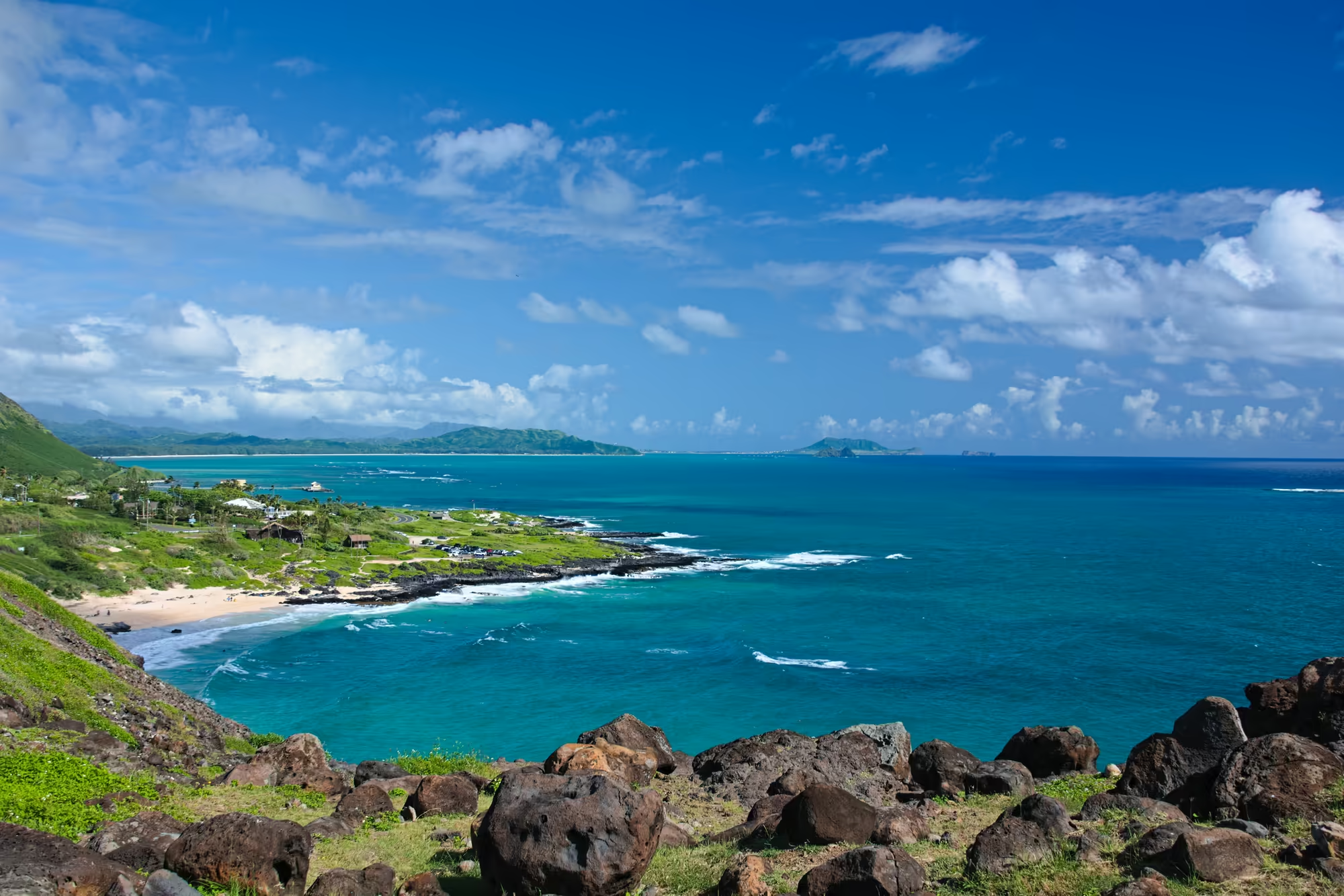
Hawaii is a chain of islands, and Oʻahu is the island of contrasts. I followed it for two days, once around in a circle on each: first clockwise to the north and west, on the second day the other way to the east. Together that is a good five hundred kilometres, and in between the island changes its face four times. In the morning Waikīkī still lies quiet beneath the towers, shortly after the road crosses the plateau between old pineapple fields. The west coast is a sheet of black lava, almost without sand. The north coast is a plantation town with palms that lean at an angle over the water. In the east the green wall of the Koʻolau stands above a coast of bays, and in the south-east Hanauma, Hālona and the old rock stairs at Koko Head follow one another. What remained is what lay between the stops.
Waikīkī, just after six
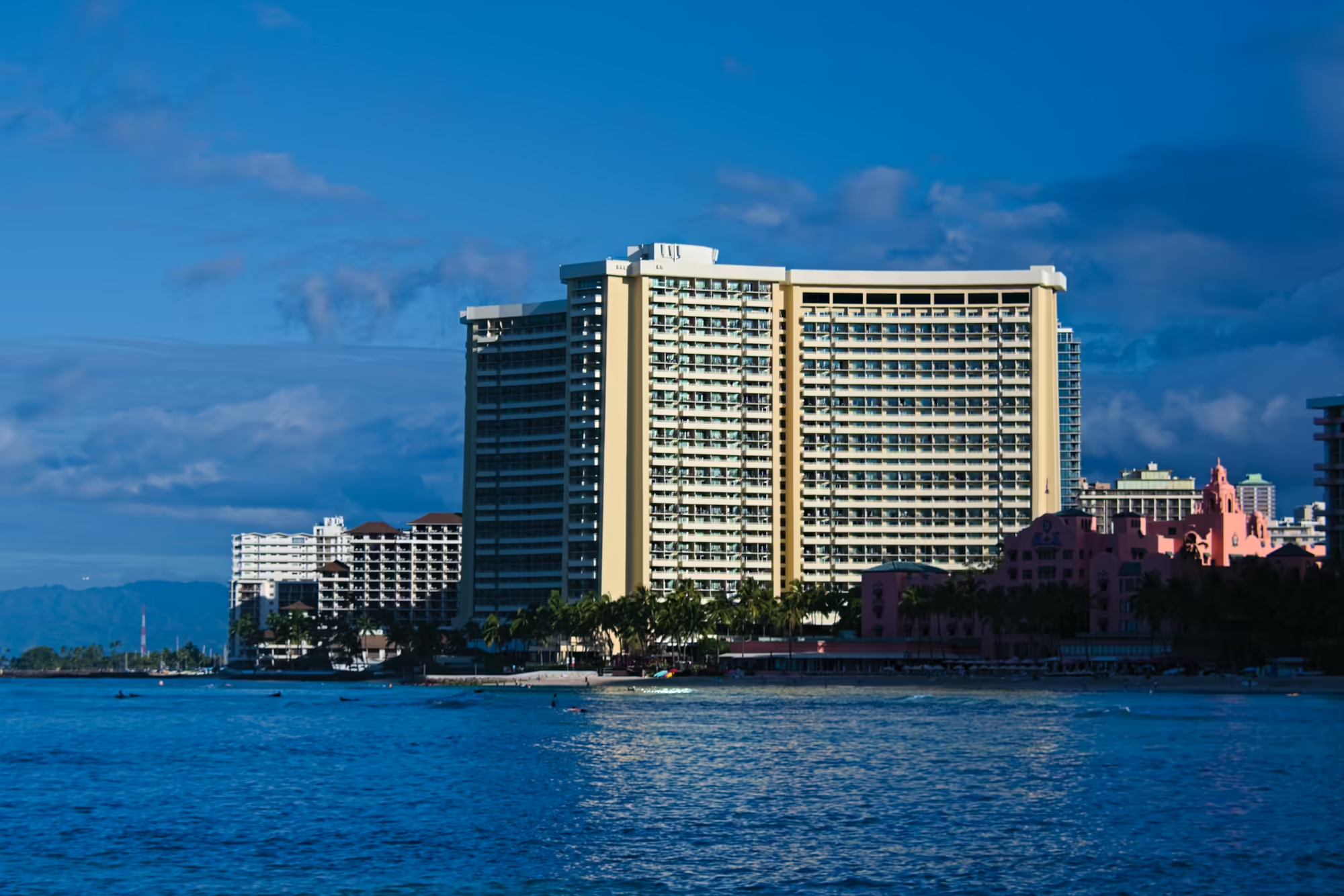
At twenty past seven the beach of Waikīkī is almost empty. The water fills the lower half of the picture, behind it lies a narrow strip of sand, a row of leaning palms and the wall of balconies. Before six the towers still stand with lit windows, the Ala Wai canal holds long strips of that light, and above the skyline the ridge of the Koʻolau can hardly be made out.
From here the road leads in the opposite direction on both days: once north across the middle of the island, once east around Diamond Head.
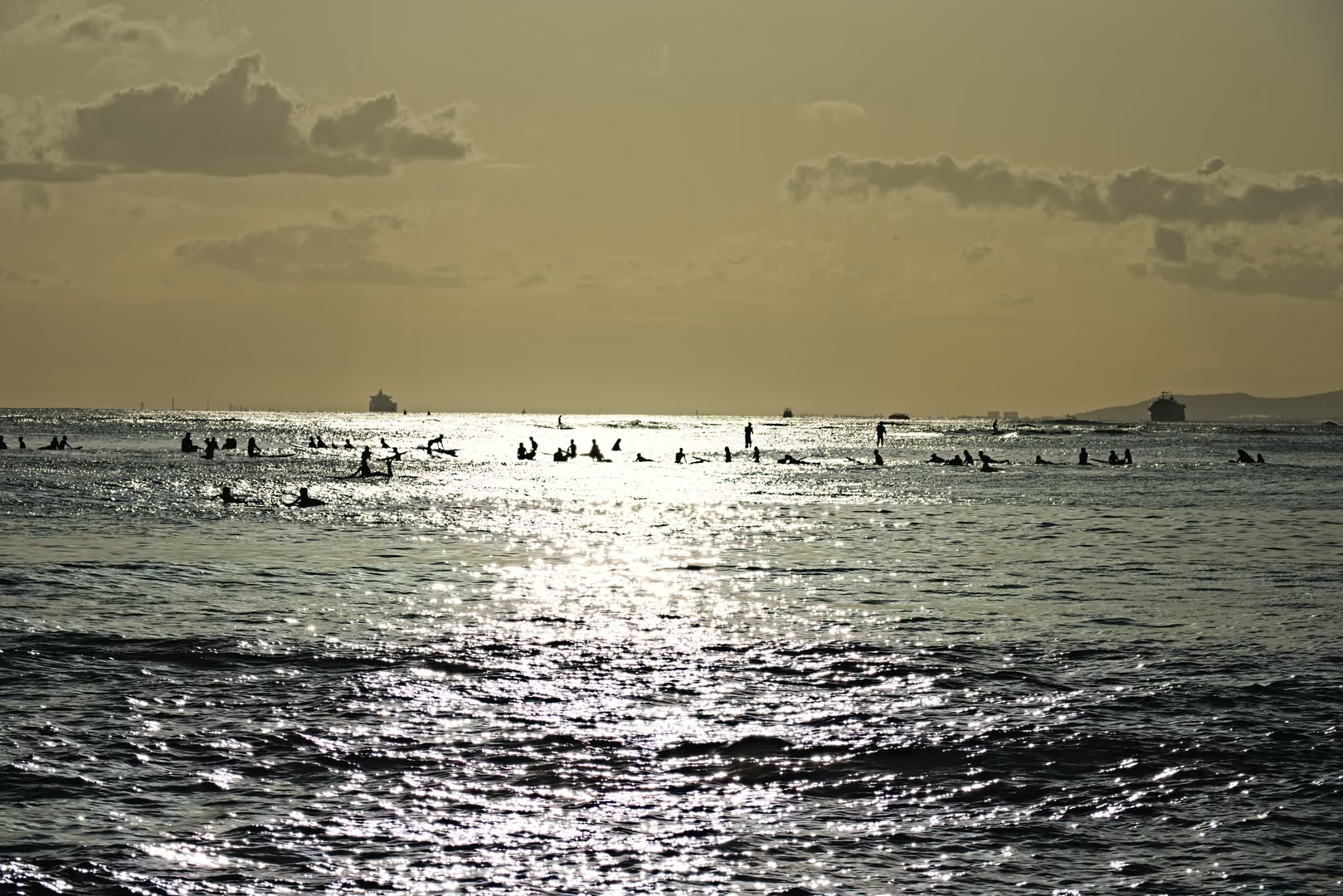
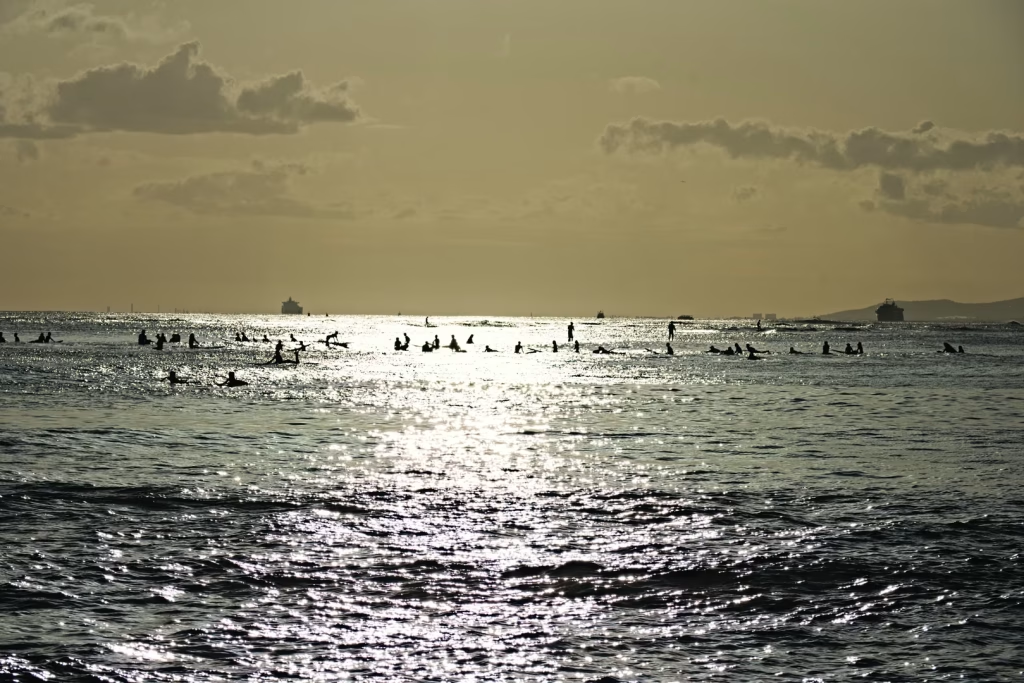
Swimmers in Backlight
Swimmers in backlight, in the water only visible as dark points.
Fine art print · 60 × 40 to 120 × 80 cm
from 79,00 €
Across the middle of the island
For twenty-one kilometres at a stretch the road leads out of Honolulu over Nuʻuanu, Kalihi and Pearl City up onto the plateau. The city dissolves into dry land, low ridges and open fields. In Wahiawā at 279 metres stand single-storey houses, behind them the mountains of the Waiʻanae.
In earlier times the pineapple fields ran from here in every direction to the horizon.
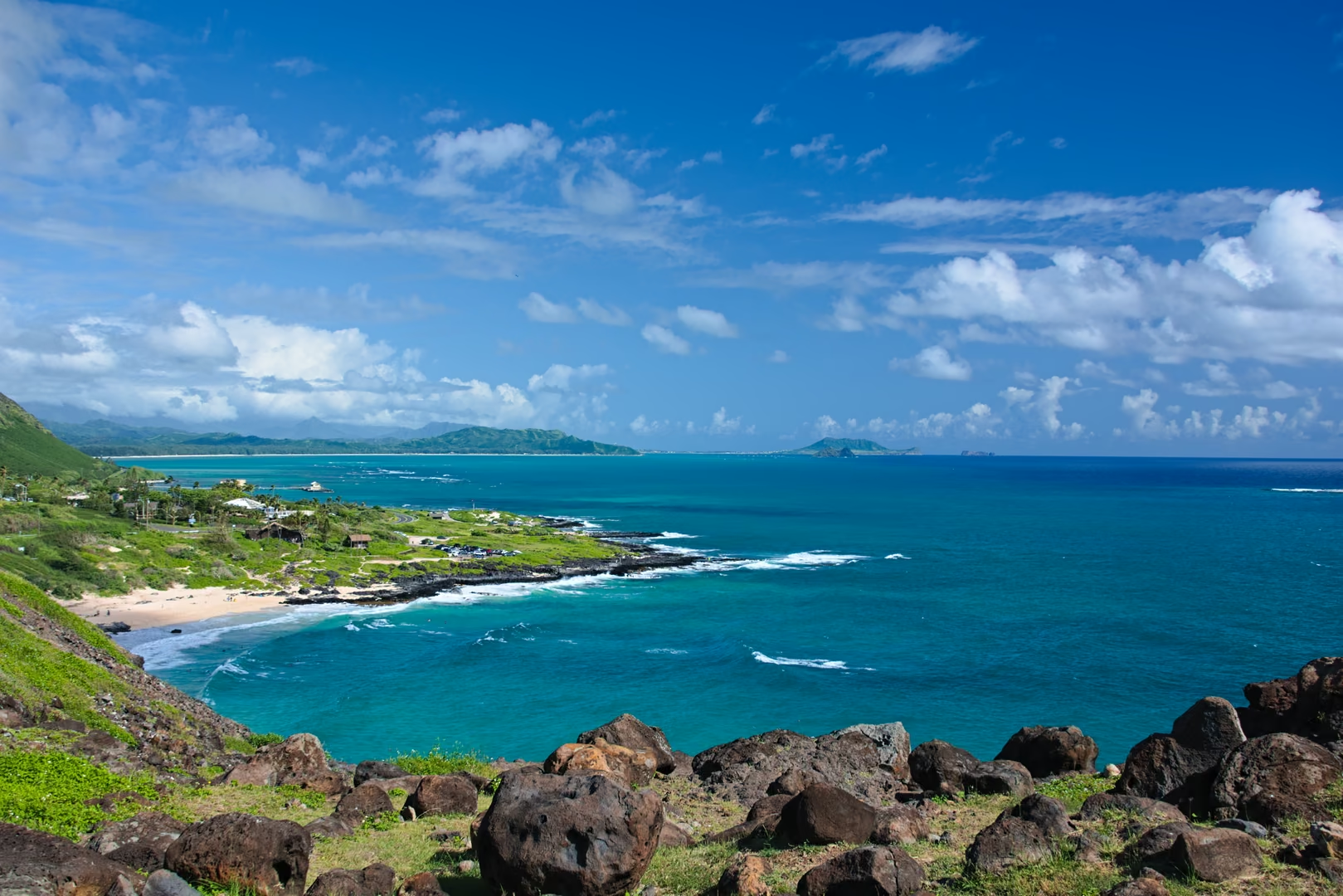
View across the Peninsula
A green peninsula with individual houses, visible only from this height.
Fine art print · 60 × 40 to 120 × 80 cm
from 79,00 €
The west coast
Where the road meets the sea again lies the leeward side. At Mokuleia it is a sheet of dark lava, pierced by small holes and covered with grey-blue lichen, between them shallow basins with brown algae and no sand. A few kilometres north this becomes a beach of red-brown sand with a line of driftwood.
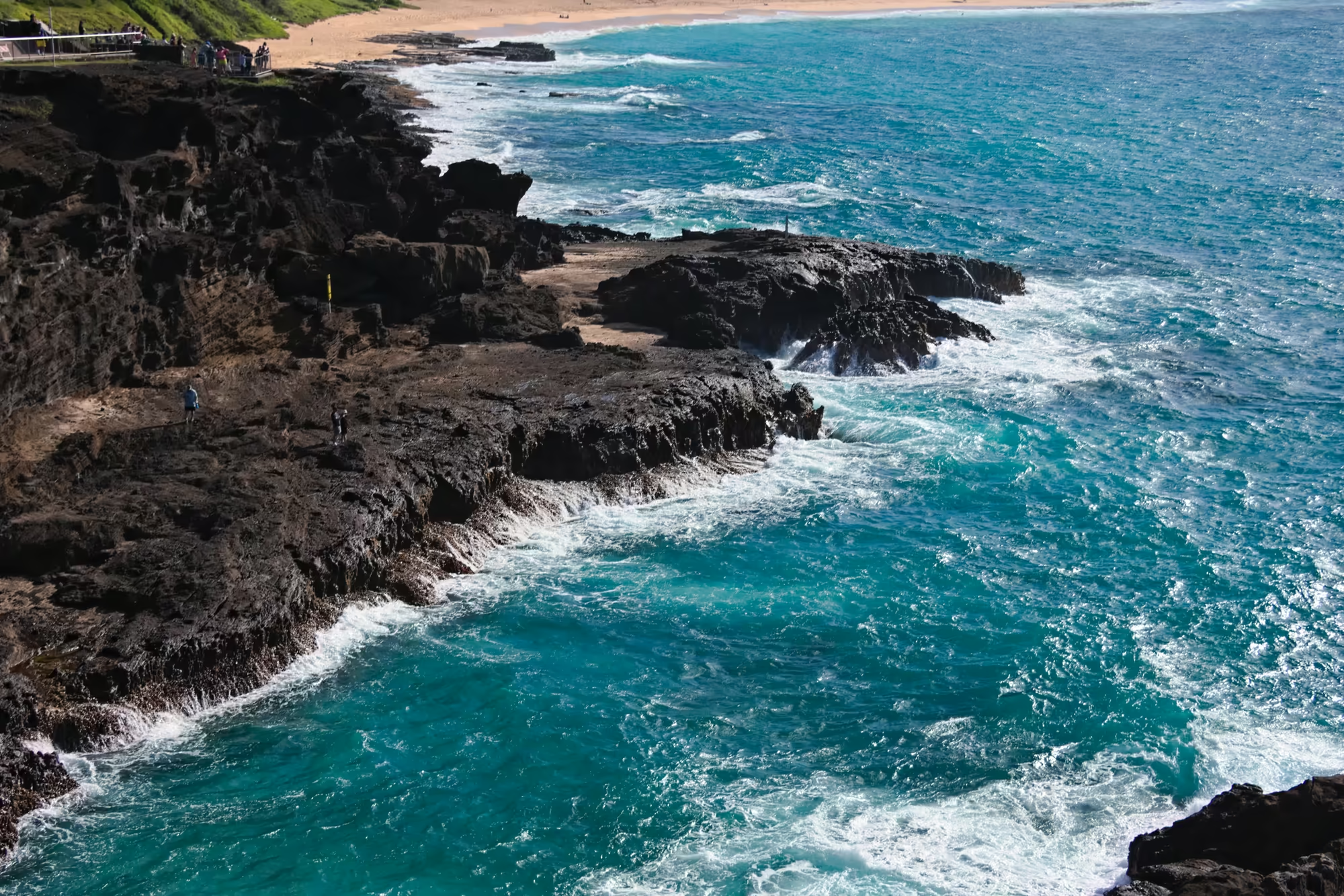
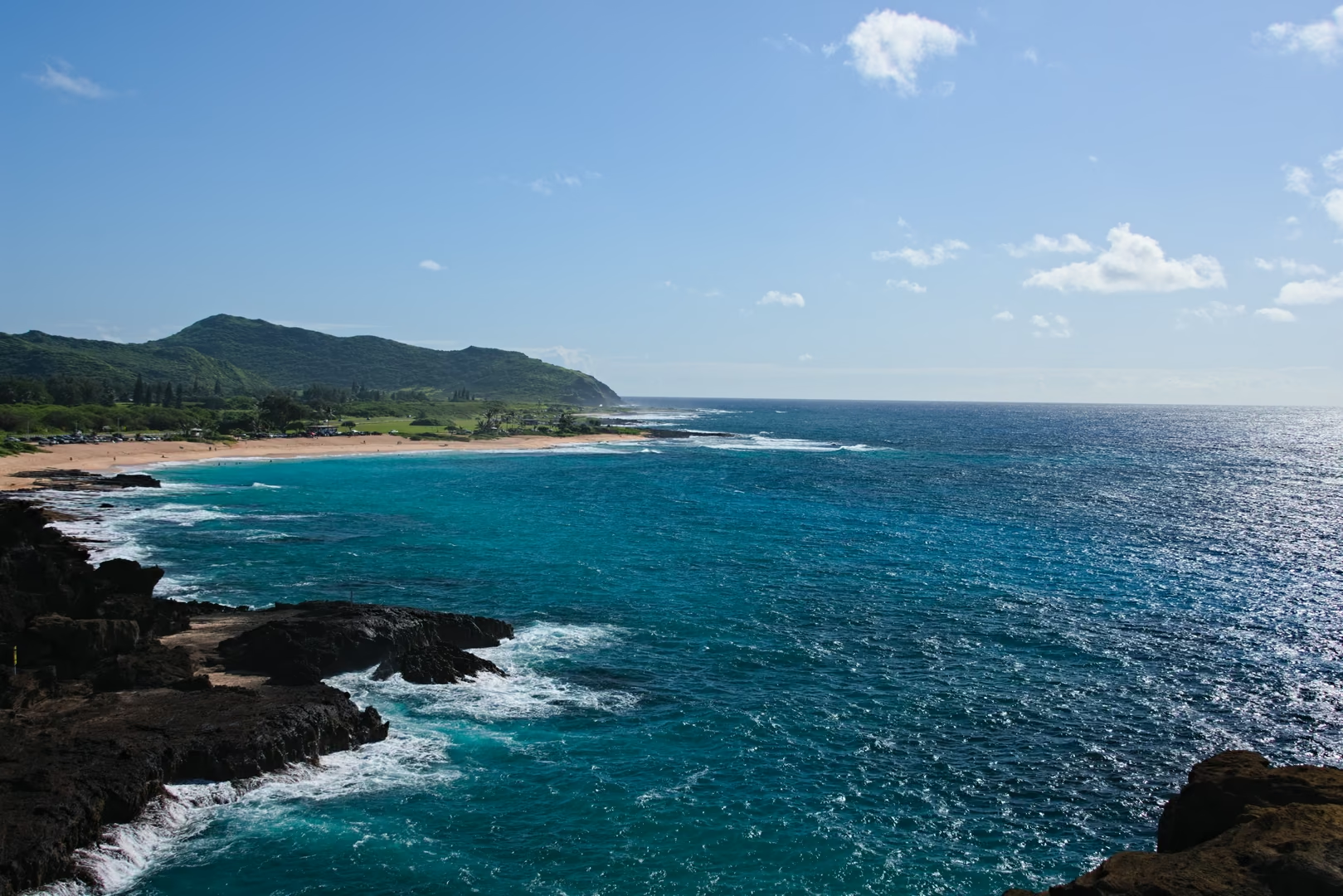
Wide Bay on the Lava Coast
Turquoise water at black rock, two colours without mediation.
Fine art print · 60 × 40 to 120 × 80 cm
from 79,00 €
Haleʻiwa and the north coast
Haleʻiwa is the largest place on the north coast, a plantation settlement at the mouth of the Anahulu, and the spot where the day slows down. Above the town stands an old tree with a flat crown whose heavy branches divide again and again.
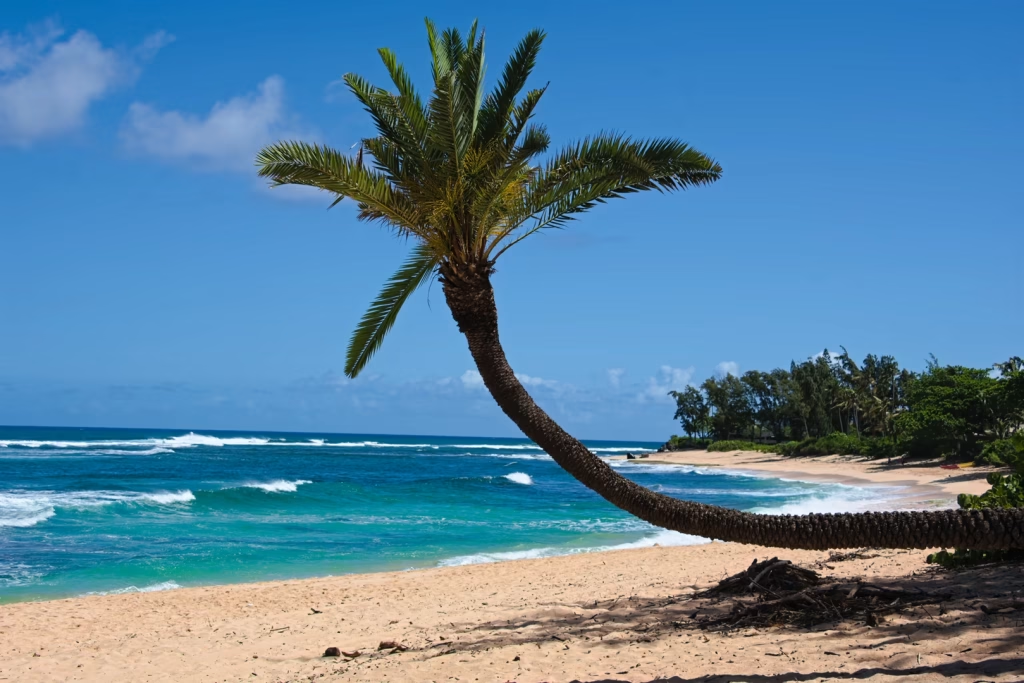
On the coast the palms lean over the water at improbable angles, their ringed trunks almost horizontal before the crown rises again.
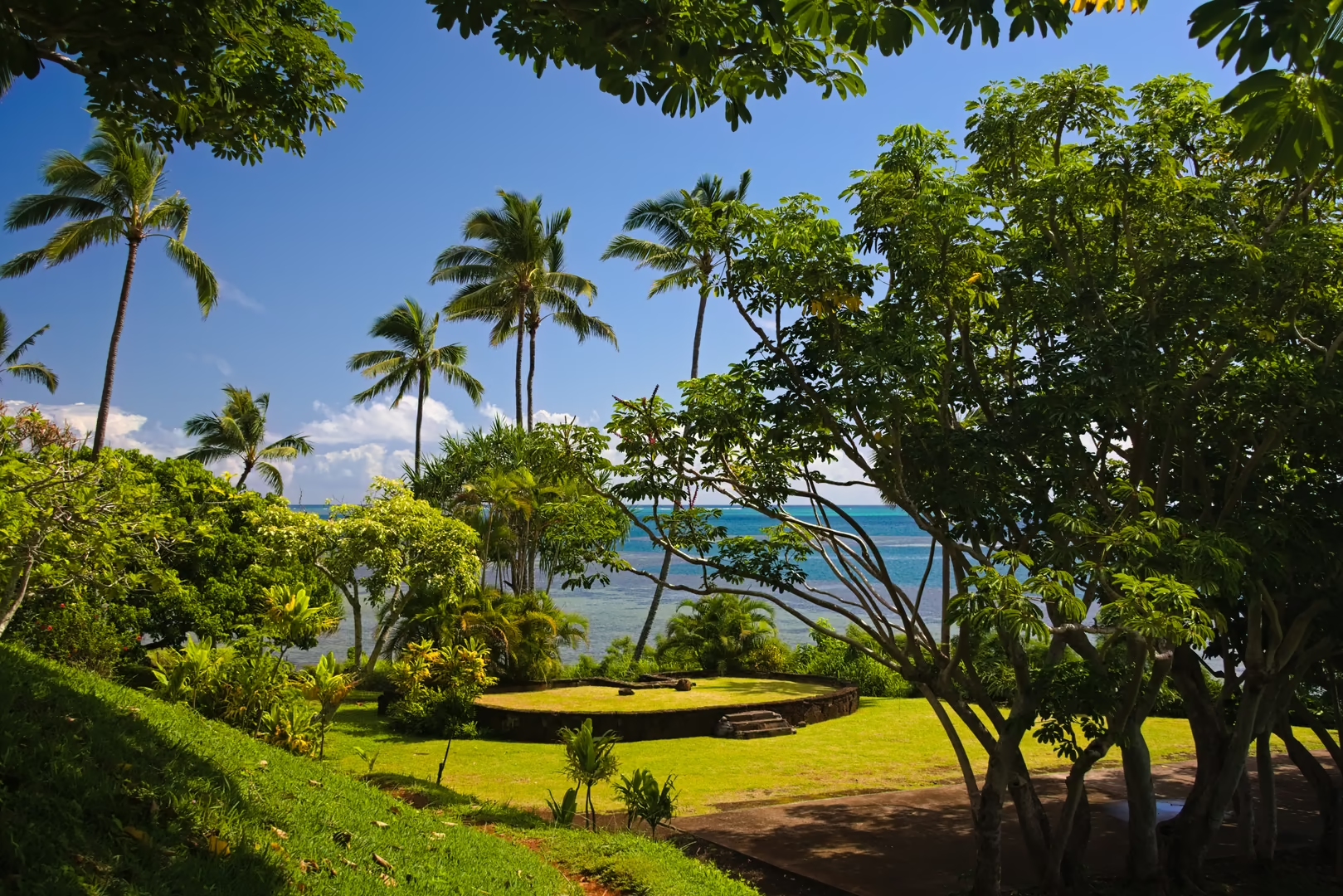
Tree in the Coastal Park
A spreading tree above the park, below it stays cool.
Fine art print · 60 × 40 to 120 × 80 cm
from 79,00 €
Kualoa and the windward coast
At the north-east tip the coast turns south again. Inside a coconut crown the fruits hang in every stage, between them leaves and shreds of dry fibre. At the water below a natural arch of layered rock curves over the surf, and outside the open sea runs on in deep blue.
South of it the road lies on a strip of a few hundred metres between water and mountain. Punaluu and Kahana line up along it, behind them the green wall of the Koʻolau rises with deep folds.
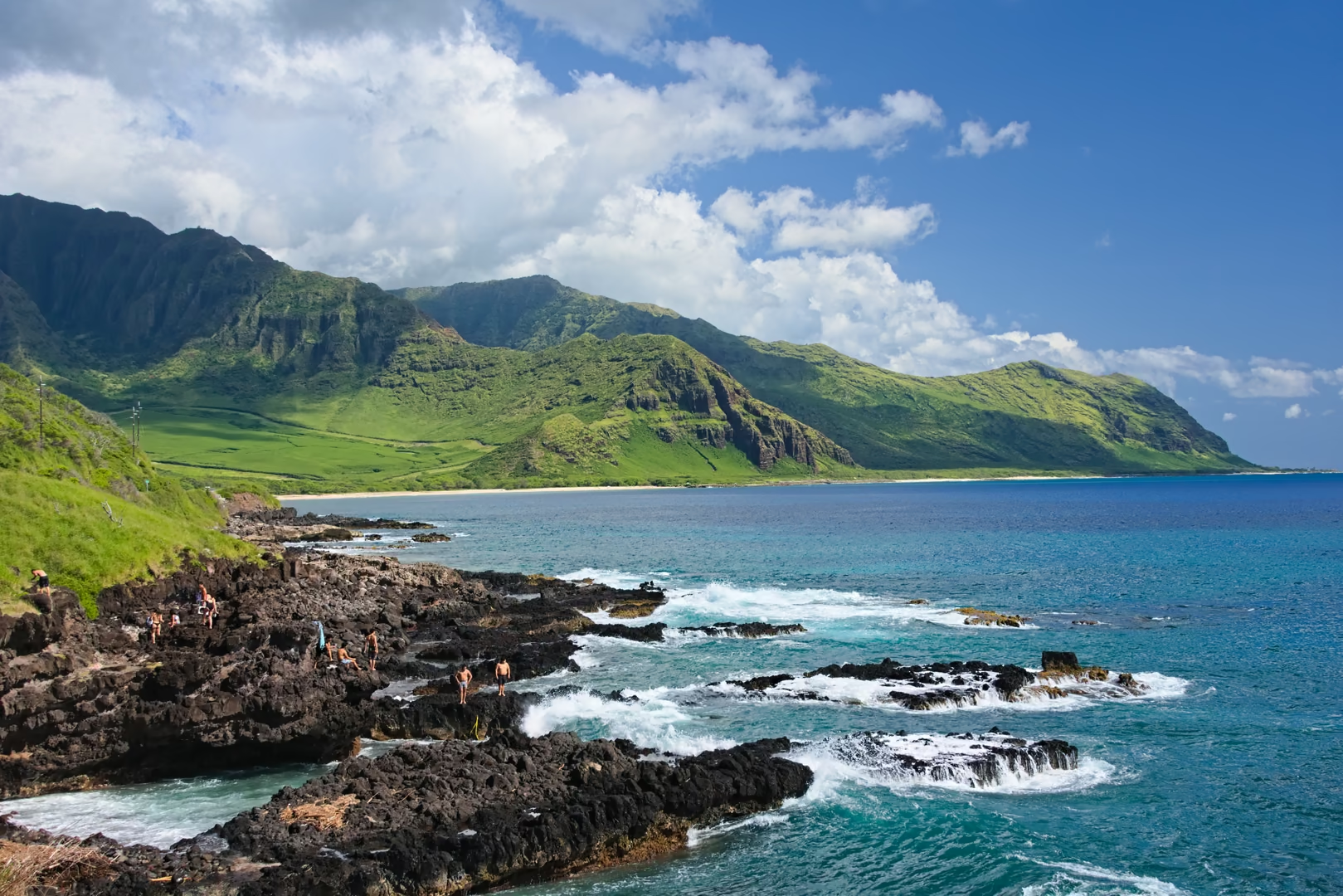
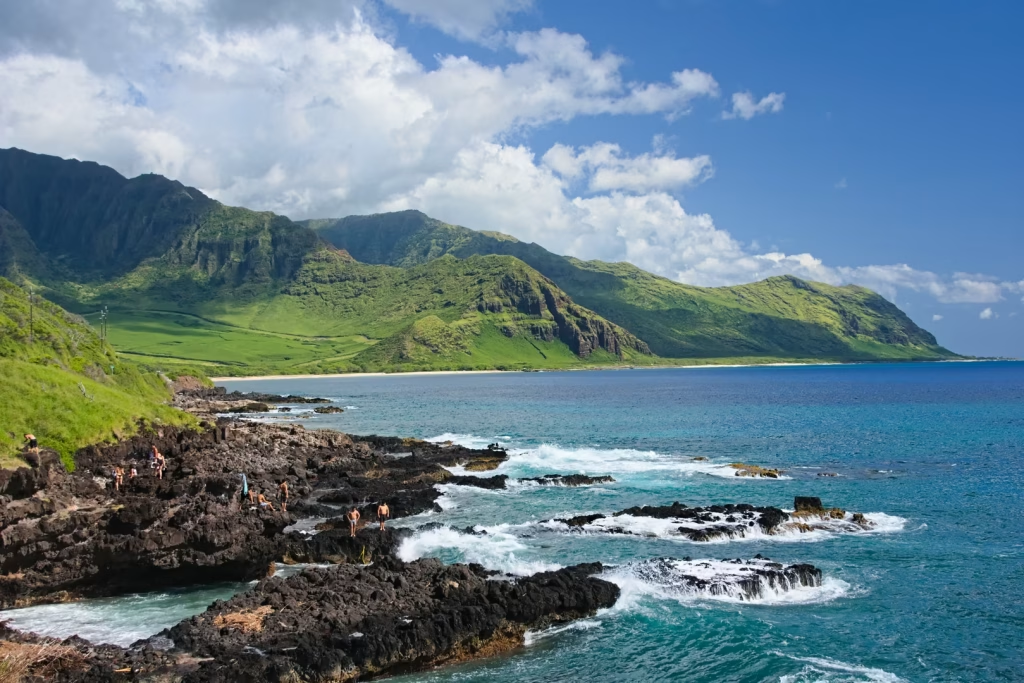
Mountains above the Lava Coast
Green mountains above a black coast, growth on top, the break below.
Fine art print · 60 × 40 to 120 × 80 cm
from 79,00 €
Kailua and the south-east
In the afternoon the road crosses the island. It leaves the windward plain at Kāneʻohe, climbs over the Koʻolau and comes down again on the other side. The bay beneath has the shape of a flooded crater, which it is: the largest sheltered water of the main islands. At Kailua and Lanikai the water stays warm and shallow far out.
The south-east is dry, windy and empty. Below Makapuʻu Point the road runs along the coast, south of it a small island with a steep rock wall stands alone in the deep blue water. Hanauma is the picture of a tropical bay: a wide curve of pale sand in a ring of low volcanic cones, turquoise water over the reef, dark blue beyond, and all the sand full of people.
A few hundred metres further on the sea works at a hole in the lava shield and throws the swell through the rock as a white column.
Koko Head and the return
Above the coastal road rises Koko Head, the largest of the tuff cones of the Honolulu chain, its flanks covered with dense low scrub. Without a single switchback the old military railway leads straight up the slope: more than a thousand sleepers, today a stair on which small figures are spread from the foot to the edge.
From the edge the gaze runs back along the coast to the towers of the city. The second day ends on the beach where it began, in the last light.
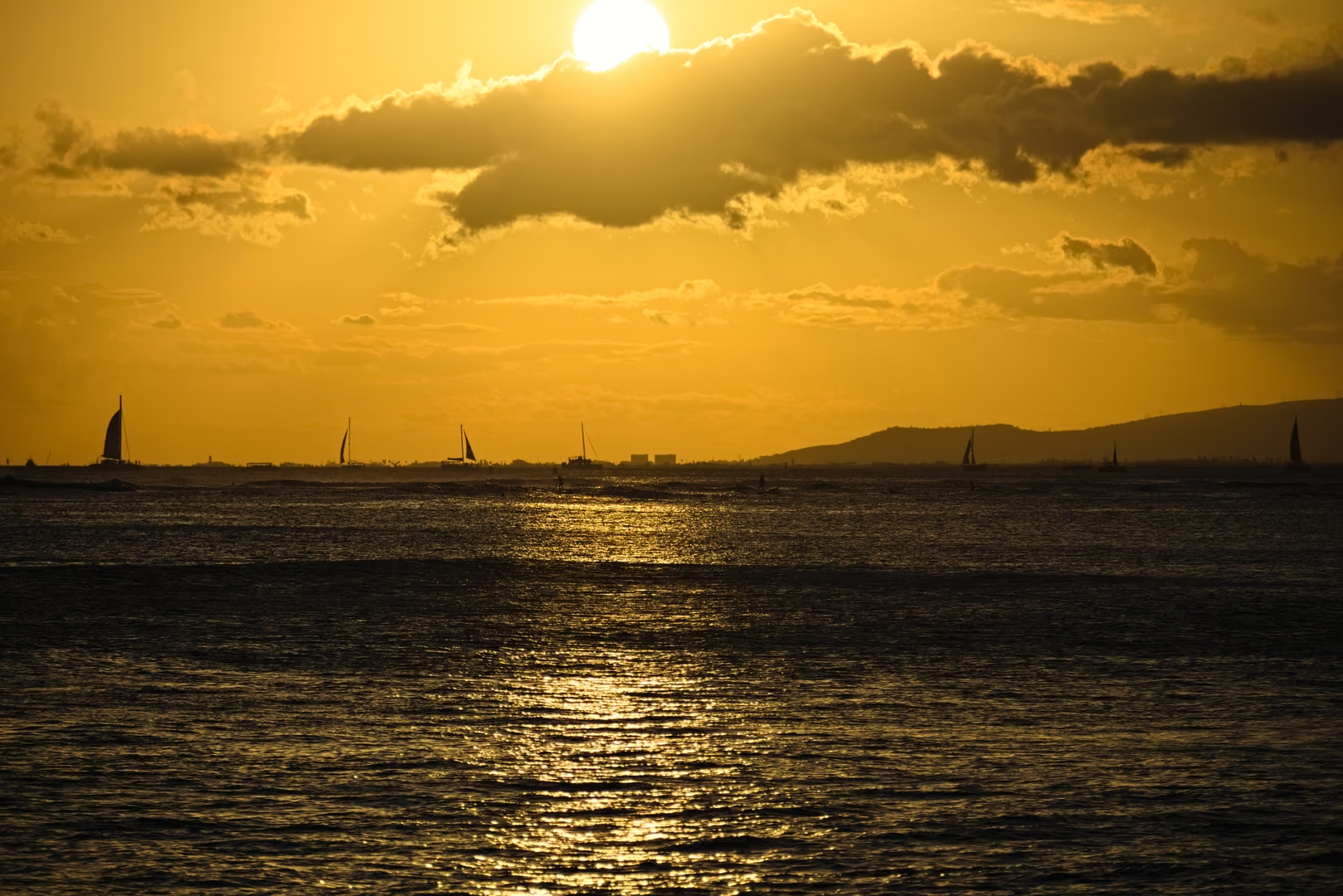
Sails in the Evening Light
Sails against a low sun, few shapes between water, light and evening.
Fine art print · 60 × 40 to 120 × 80 cm
from 79,00 €
Works from this journey
-
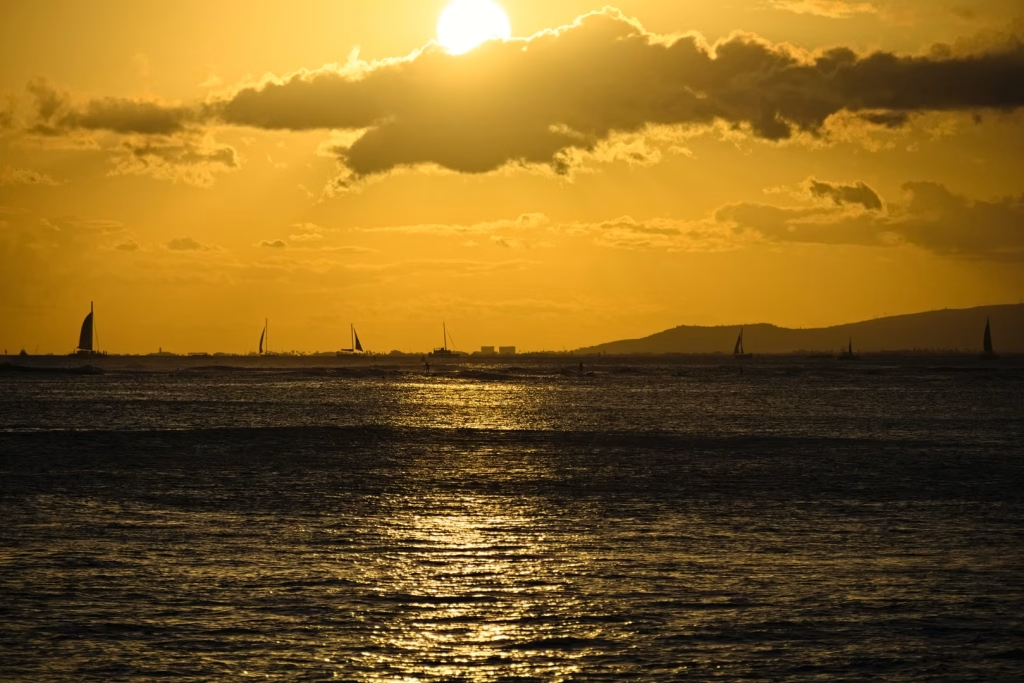
Sails in the Evening Light
From 79,00 € -
Swimmers in Backlight
From 79,00 € -
Mountains above the Lava Coast
From 79,00 € -
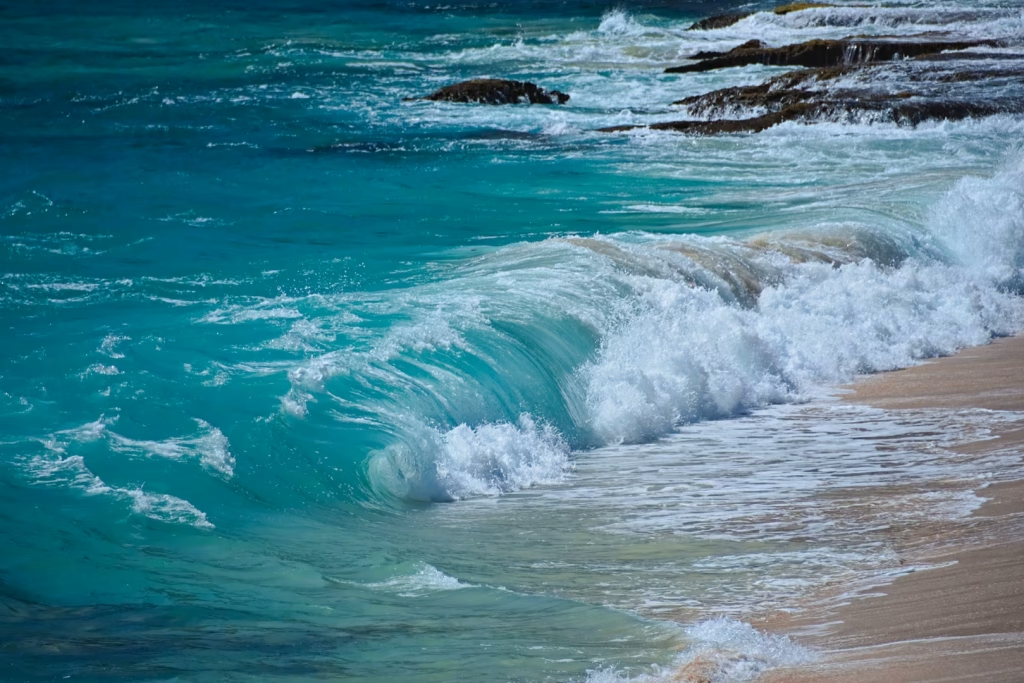
Breaking Wave
From 79,00 € -
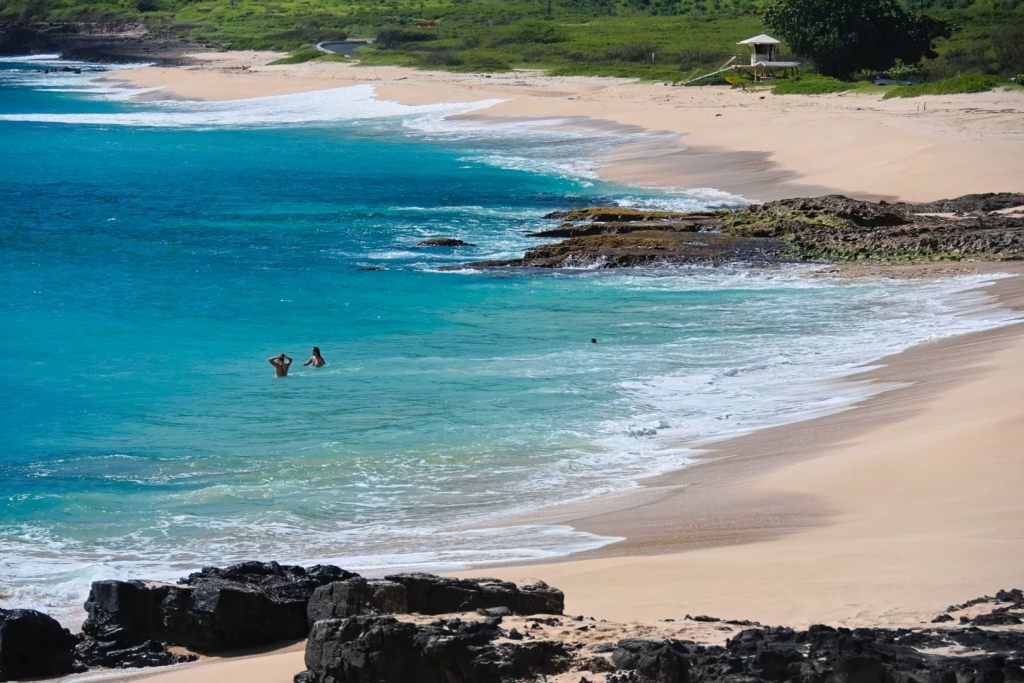
Sandy Cove before Dark Rocks
From 79,00 € -
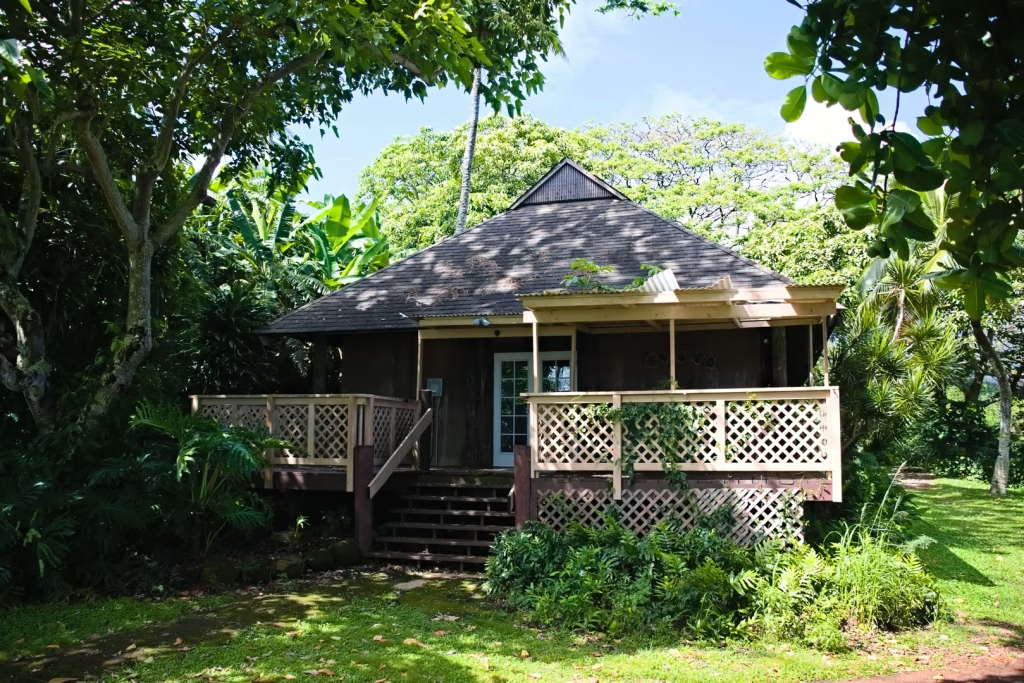
Wooden House with Veranda
From 79,00 € -
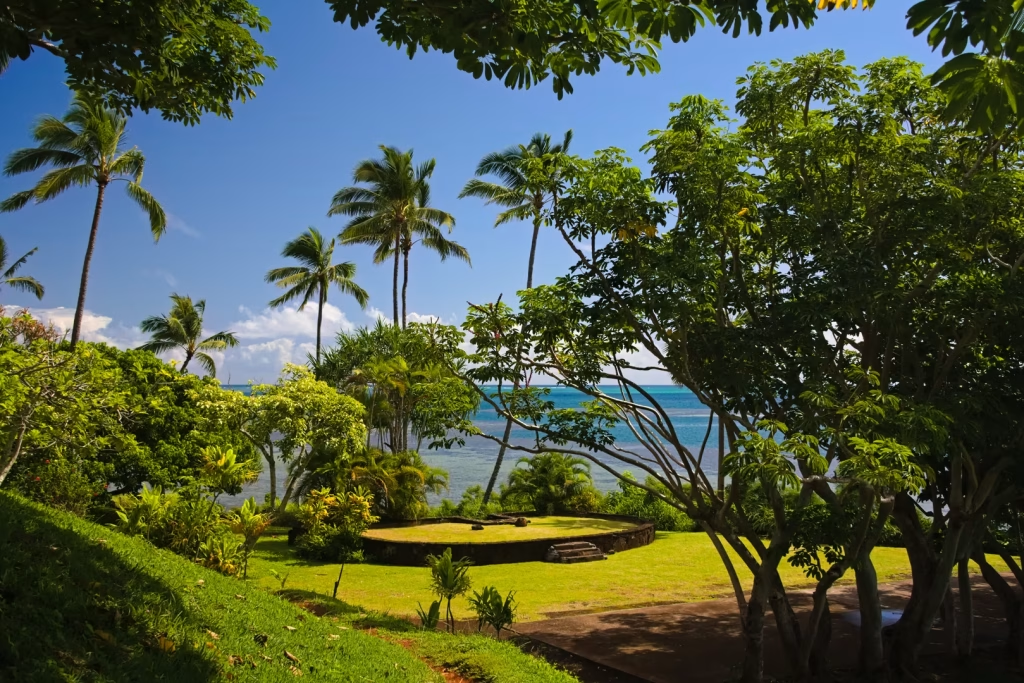
Tree in the Coastal Park
From 79,00 € -
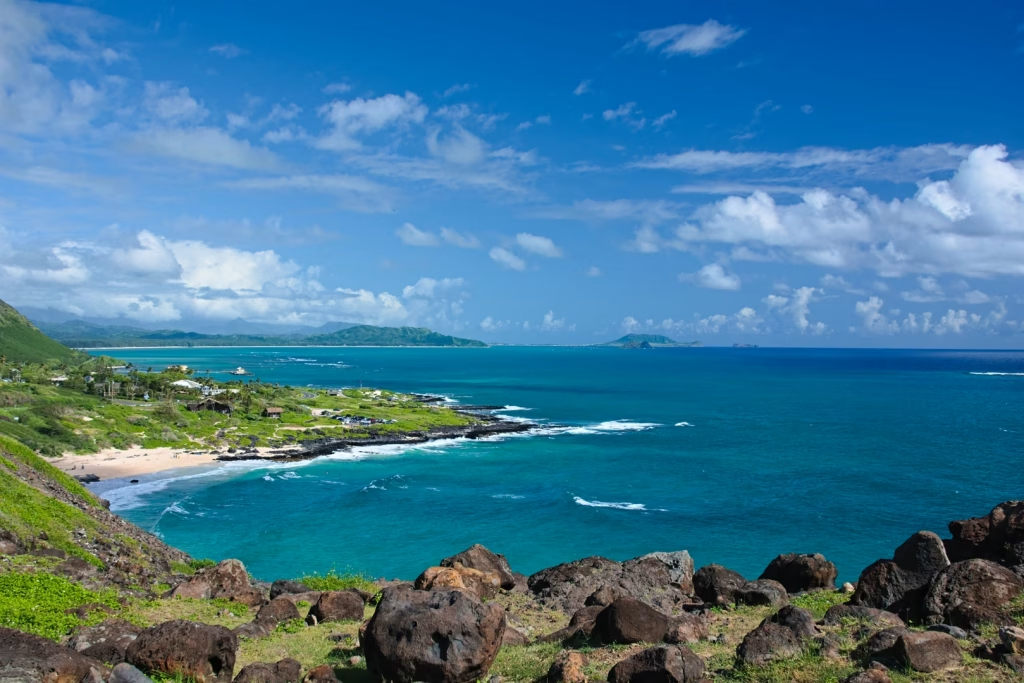
View across the Peninsula
From 79,00 € -
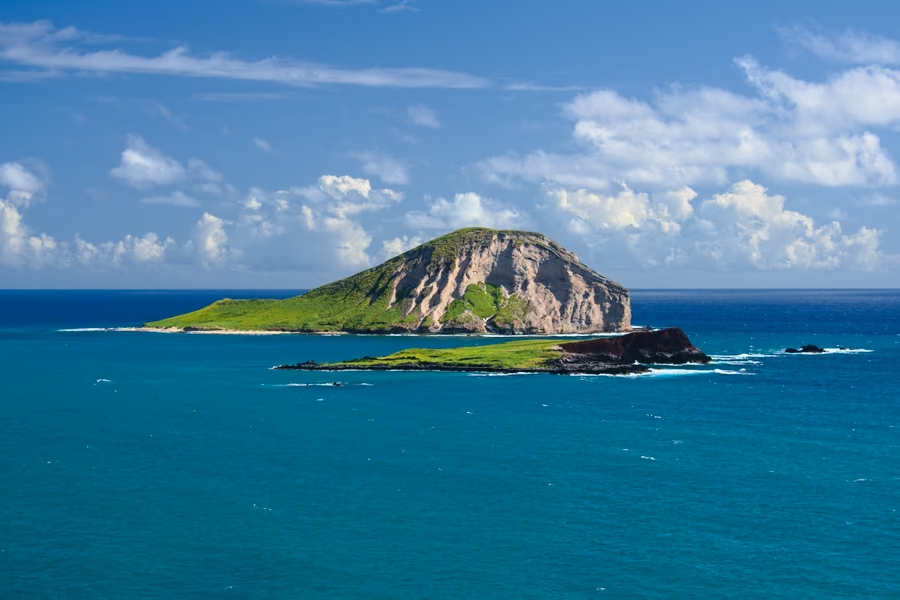
Island off the Coast
From 79,00 € -
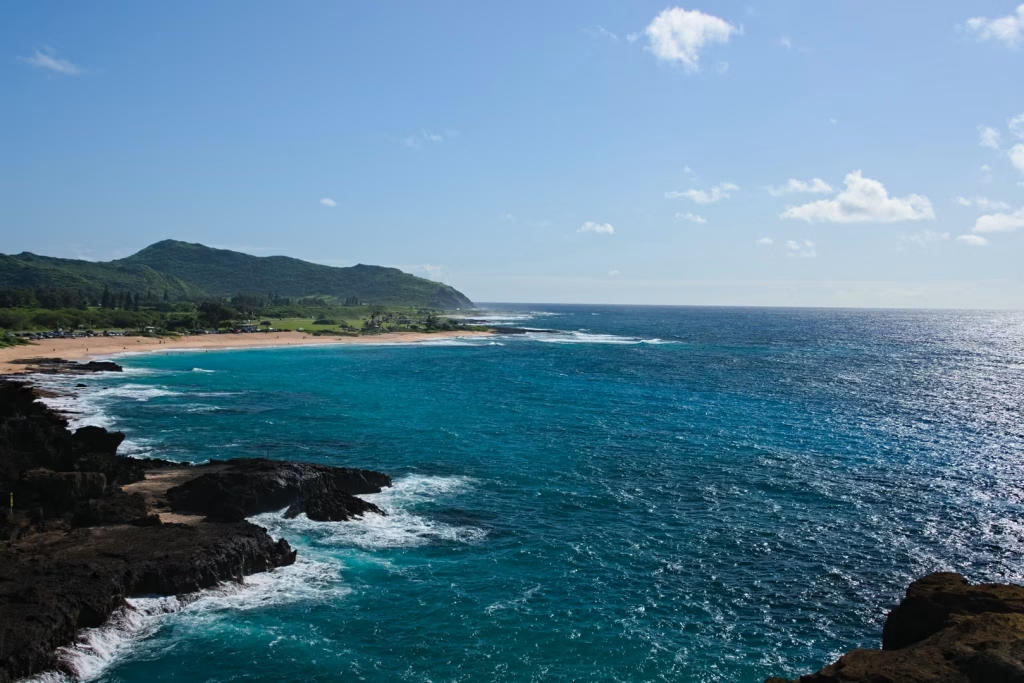
Wide Bay on the Lava Coast
From 79,00 € -
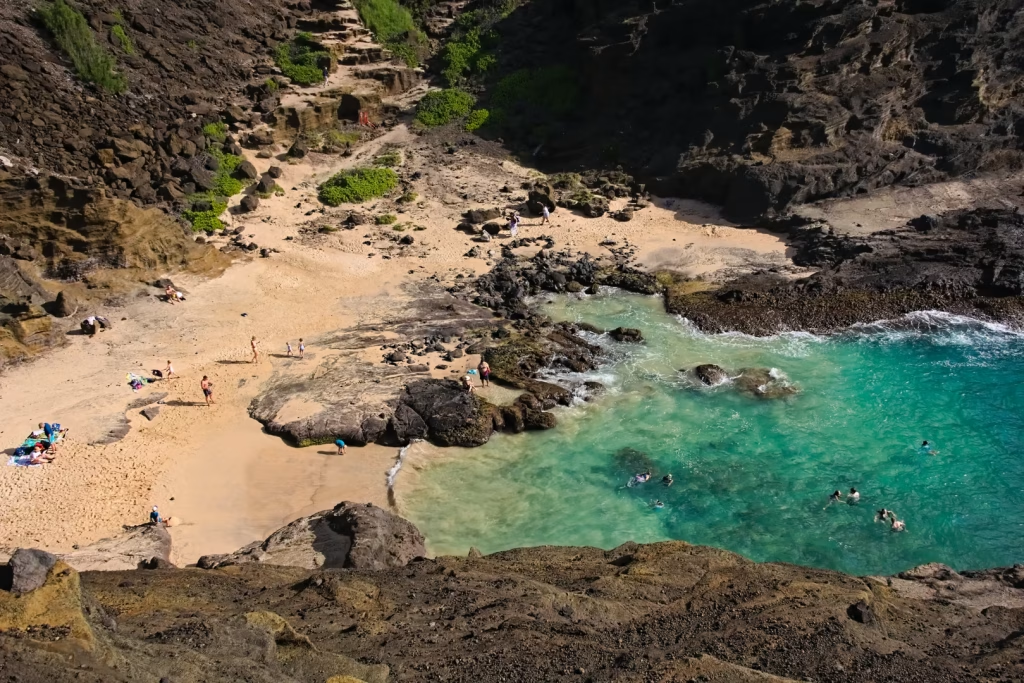
Bathing Bay below the Cliff
From 79,00 € -
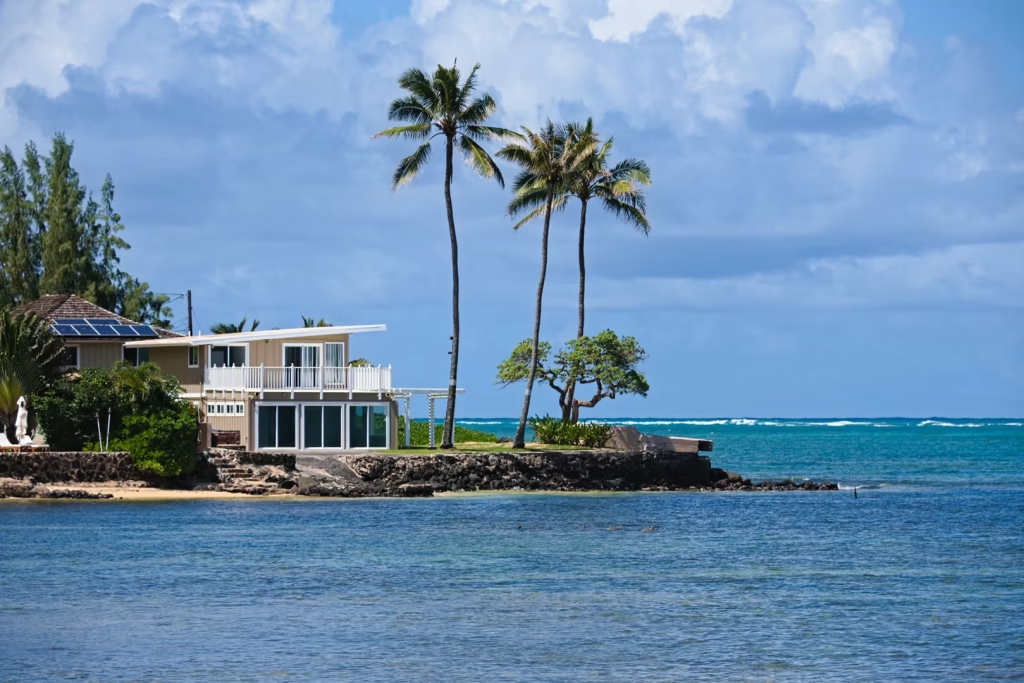
House on the Lava Tongue
From 79,00 € -
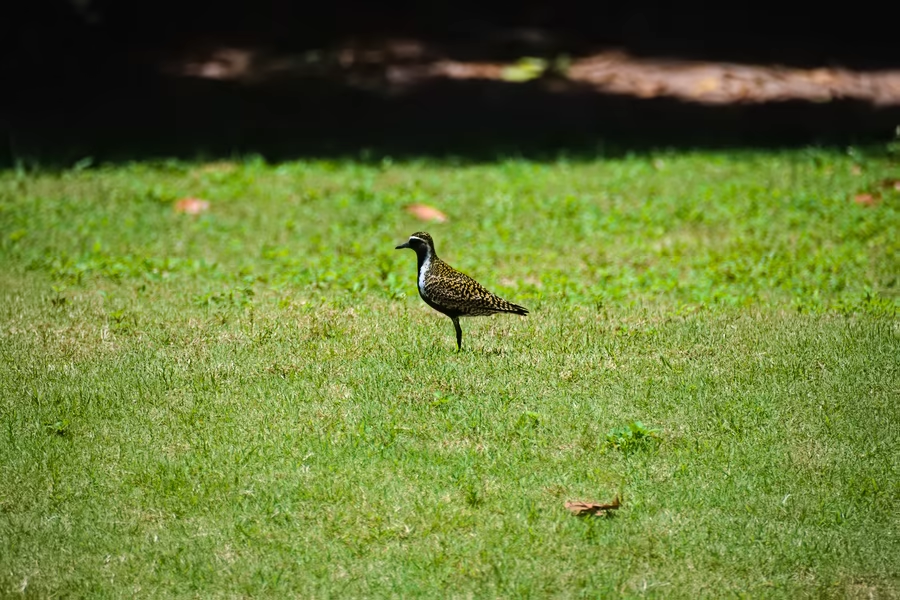
A Bird on the Lawn
From 79,00 € -
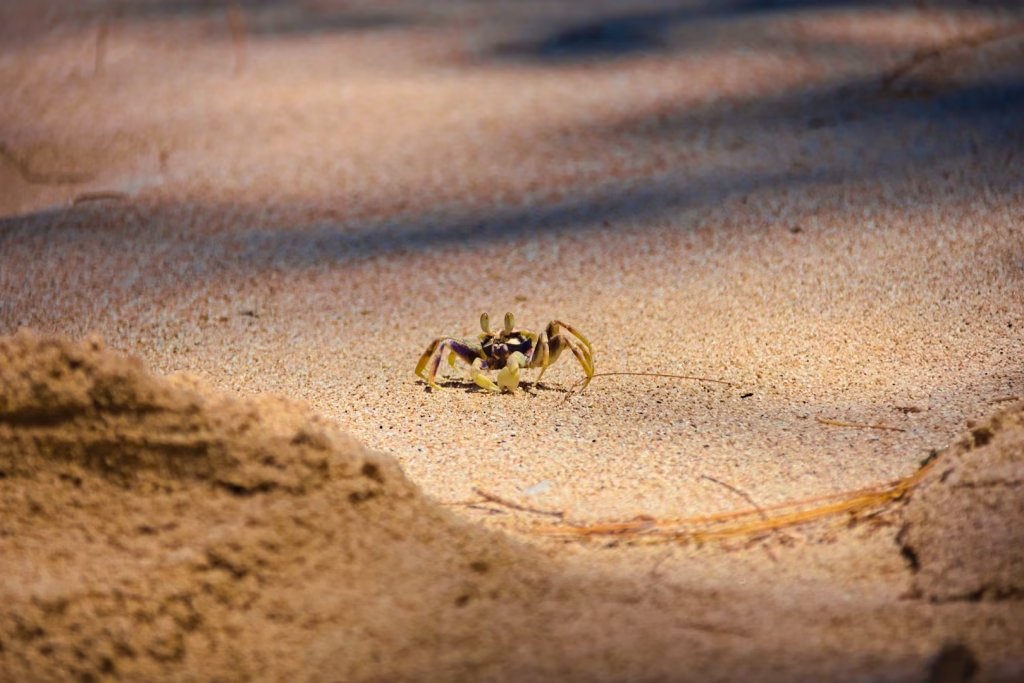
Crab in the Sand
From 79,00 € -
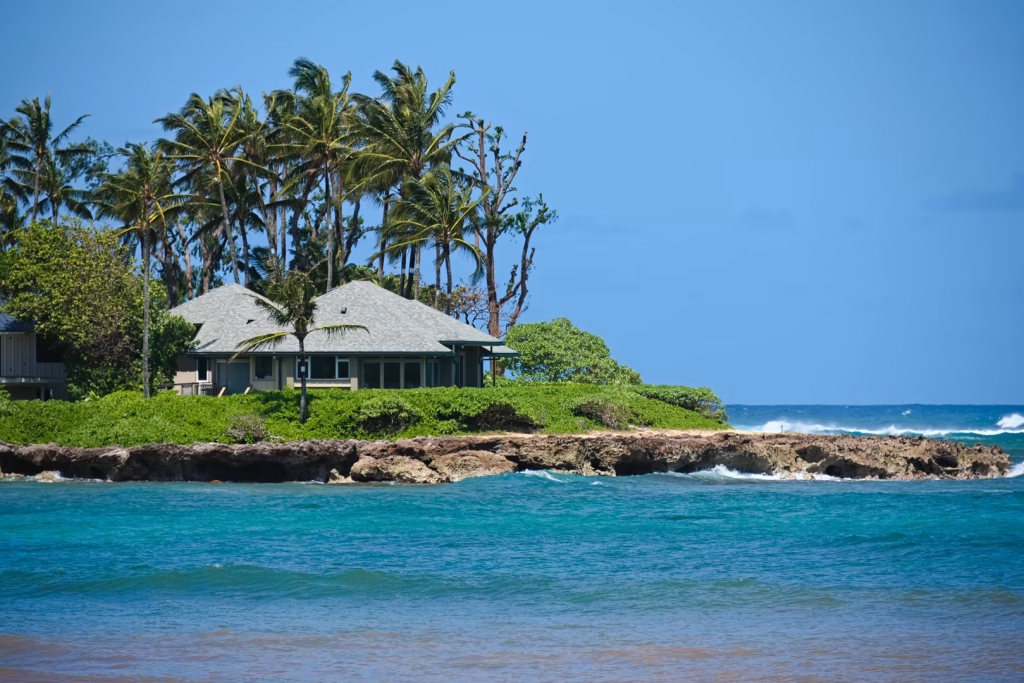
House Among Palms
From 79,00 € -
Leaning Palm on the Beach
From 79,00 € -
Four Birds Foraging
From 79,00 € -
Surf in Backlight
From 79,00 €